
United States of America
Last updated: 24 March 2026
At a glance
The United States offers some of the most varied cruising in the world, with distinct sailing regions spanning the Atlantic seaboard, the Gulf of Mexico, the Pacific coast, Alaska, and Hawaii. The scale of the country means that each region has its own character, climate, and sailing season, and most visiting yachts focus on one or two areas rather than attempting to cruise the whole.
The eastern seaboard runs from the subtropical waters of Florida through the well-charted cruising grounds of the Chesapeake Bay and the mid-Atlantic states, past the busy waters of New York and New England, to the rugged and dramatic coastline of Maine. The Gulf of Mexico offers extensive shallow-water cruising along the Florida panhandle and the Texas coast, with a character quite different from the Atlantic side. On the Pacific coast, California provides reliable summer sailing under the influence of the prevailing northwesterly winds, while the Pacific Northwest offers spectacular scenery and protected waters among the islands of Washington State. Alaska represents one of the world's great wilderness cruising destinations, with vast uninhabited coastlines, glaciers, and abundant wildlife. Hawaii sits in isolation in the central Pacific, a natural waypoint for transoceanic passages and a destination in its own right.
Infrastructure varies considerably across these regions. The eastern seaboard and California are well served by marinas, boatyards, and yacht services. Alaska and parts of the Gulf coast are more remote, requiring greater self-sufficiency.
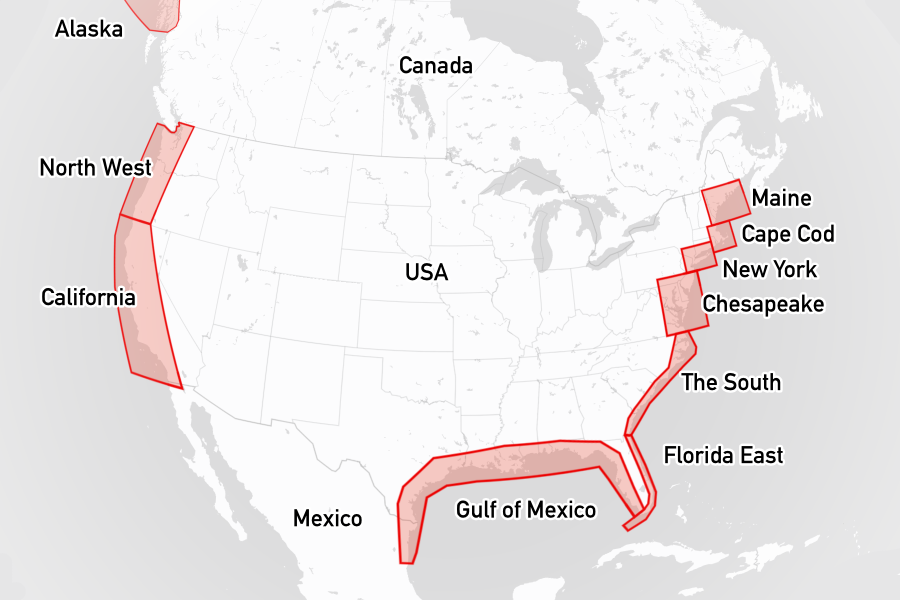
Explore sailing areas
Our sailing area guides contain the most useful information for cruisers, including top-rated places to stay, attractions, yacht services, and summaries of yacht clearance experiences.
- Alaska Attracts sailors with fjords, glaciers, and abundant wildlife on remote cruising routes.
- California Draws yachts with varied coastal scenery and a mix of city marinas and open anchorages.
- Cape Cod Offers historic towns and island resorts on the eastern seaboard.
- The Chesapeake Known for its expansive, protected bay and welcoming maritime communities.
- Florida East Coast and Keys Serves as a departure point for Caribbean voyages and offers a high concentration of marine services.
- Gulf of Mexico Offers generally warmer waters and an array of ports, popular for shoulder-season and winter cruising.
- Maine Features rugged coastlines and secluded anchorages, attractive for summer cruising.
- New York & Long Island Sound Combines iconic city approaches with sheltered Sound harbors and island resorts.
- The North West Renowned for scenic cruising among forested islands with easy ocean access near major cities.
- The South Enjoys a mix of inland and coastal routes that link historic ports along the southern Atlantic seaboard.
Yacht clearance and notes for mariners
See the relevant sailing area page above for details.
The off-season
The USA's size means there is no single off-season applicable across all regions. Cruising patterns vary significantly by area.
Atlantic and Gulf coasts
The Atlantic seaboard south of Cape Hatteras, including Florida and the Gulf of Mexico, is subject to the North Atlantic hurricane season, which runs from June through November. Most cruising yachts leave these waters during the peak summer months, with many heading to designated hurricane holes or relocating further south. North of Hatteras, the Chesapeake, New England, and Maine waters are less affected and remain active through the summer, with most yachts departing by October ahead of deteriorating autumn and winter conditions.
Pacific coast and Hawaii
California's sailing season runs broadly from spring through autumn, with winter bringing stronger northwesterlies and less settled conditions. The Pacific Northwest season is concentrated in the summer months, when conditions are most settled and daylight is longest. Hawaii enjoys a year-round sailing climate, with the trade winds providing reliable conditions for much of the year.
Alaska
Alaska's cruising season is short, running from roughly May through September, constrained by weather, daylight, and the practicalities of operating in a remote wilderness environment.
Facts for visitors
- Best times of year to sail here: Varies by region; broadly May through October for the Atlantic seaboard and Pacific coast.
- Most common type of sh.ore power: 120V 60Hz.
- Cost for provisioning: Medium overall, high in some areas.
- Currency: US Dollar (USD)
- Personal security: Varies by area; generally safe in marina environments with standard precautions advised in urban areas.
- Emergency phone numbers:
- All emergencies: 911
- International dialing code: +1
- Time zone(s): Multiple zones: Eastern (UTC-5), Central (UTC-6), Mountain (UTC-7), Pacific (UTC-8), Alaska (UTC-9), Hawaii (UTC-10).
Maritime history
The maritime history of the United States is inseparable from the story of the nation itself. The eastern seaboard was the cradle of American settlement, with the colonial ports of Boston, New York, Philadelphia, and Charleston serving as the principal gateways for European immigration and trade from the seventeenth century onwards. The fishing grounds of New England, particularly around Cape Cod and Maine, drew fleets from both sides of the Atlantic and shaped the character of communities that remain deeply connected to the sea today.
The Revolutionary War was in significant part a maritime contest, with British naval supremacy a constant constraint on the Continental cause. The young republic's subsequent investment in naval power culminated in the establishment of the United States Navy, which by the nineteenth century had grown into a force capable of projecting American interests across the Atlantic and into the Pacific. The War of 1812 and the Civil War both underscored the strategic importance of coastal control, with the Union blockade of Confederate ports among the most consequential naval campaigns in American history.
The late nineteenth and early twentieth centuries saw the United States emerge as a global maritime power, with the construction of the Panama Canal in 1914 transforming the strategic and commercial relationship between the Atlantic and Pacific coasts. The Pacific theatre of the Second World War brought American naval power to its greatest test, with the battles of Midway and Leyte Gulf among the most significant naval engagements of the conflict. Pearl Harbor in Hawaii remains the most significant maritime site in the American national consciousness, drawing visitors from around the world.
Today the United States maintains the world's largest navy and a vast commercial shipping industry, while its coastlines support one of the most active recreational sailing communities anywhere. From the regattas of Newport and Annapolis to the wilderness passages of Alaska's Inside Passage, American waters offer an extraordinary range of experience for the cruising sailor.