
Panama
Last updated: 3 February 2026
At a glance
Panama links the Caribbean Sea and the Pacific Ocean via the Panama Canal and is a major waypoint for yachts on trans‑ocean passages, with established cruising grounds on both coasts.
On the Caribbean side, cruising ranges from the archipelagos and reefs of Bocas del Toro to Guna Yala, where the indigenous Guna people maintain an autonomous territory, traditional villages, and distinctive textile art among the islands.
The Pacific coast offers gulfs and offshore islands, including those in the Gulf of Panama and along the Azuero Peninsula.
Explore sailing areas
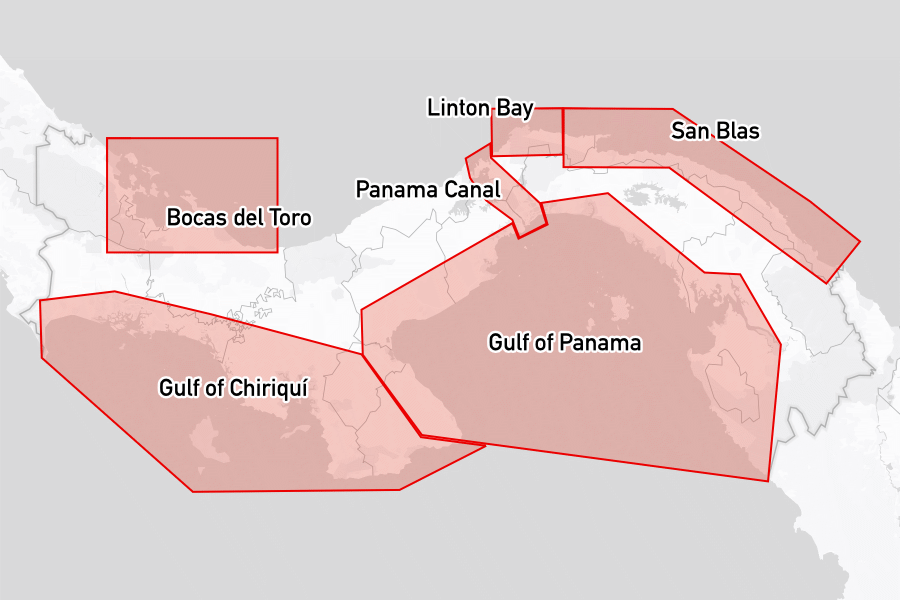
Our sailing area guides contain the most useful information for cruisers, including top-rated places to stay, attractions, yacht services, and summaries of yacht clearance experiences.
- Bocas del Toro Popular for its lush tropical setting, social cruiser scene, and easy access to a wide choice of sheltered anchorages and marinas.
- Linton Bay Valued for its full-service marina, haul-out facilities, and convenient jumping-off point for Portobelo and the San Blas.
- San Blas Renowned for its remote palm-fringed islands, clear water anchorages, and the culturally rich Guna Yala communities.
- The Panama Canal Essential for cross-ocean passages and a unique opportunity to transit one of the world’s great engineering works.
- Gulf of Panama Important staging area for Pacific cruising, with Panama City marinas and nearby island escapes such as the Las Perlas.
- Gulf of Chiriquí Appeals to cruisers looking for remote islands, a UNESCO-listed marine park, rich marine life, and generally uncrowded anchorages.
Yacht clearance and notes for mariners
See the relevant sailing area page above for details.
The off-season
The off-season in Panama is marked by the rainy season, which runs from May to November. While some cruisers choose to move on during this period, many remain in established liveaboard hubs such as Bocas del Toro, where marinas provide year‑round shelter and services. The very humid climate and frequent thunderstorms, with associated lightning, can be a concern.
Facts for visitors
- Best times of year to sail here: December to April
- Most common type of shore power: 120V 60Hz
- Cost for provisioning (groceries): Medium, with cheaper options in local markets compared to imported goods in marinas
- Currency: Panamanian Balboa (PAB) and US Dollar (USD)
- Personal security: Generally safe in popular sailing areas, though caution is advised in isolated regions
- Emergency phone numbers:
- Police: 104
- Fire: 103
- Ambulance: 911
- International dialing code: +507
- Time zone(s): UTC-5
Maritime history
Panama's maritime history is deeply rooted in its strategic geographical position connecting the Atlantic and Pacific Oceans. The earliest period of settlement involved the Cueva and Coclé indigenous tribes, who utilized the region's natural resources and waterways long before European contact. Some remnants of their navigational ingenuity and trade practices are still studied today.
The advent of Spanish exploration during the 16th century marked Panama as a pivotal location for constructing trade routes across the Central American isthmus. Maritime traffic intensified with the creation of the Camino Real, transporting goods from the Pacific to Spanish colonies in the Caribbean. This development spurred centuries of conflict, particularly with English and Dutch pirates targeting Panama's wealth-laden ports.
The 19th and early 20th centuries saw Panama rising as a central node of international maritime commerce. The building of the Panama Canal by the United States, concluded in 1914, revolutionized global trade. This engineering marvel remains a significant passageway for ships worldwide, offering a fascinating transit experience for modern sailors, combining historical intrigue with contemporary maritime challenges.
Today, the canal and surrounding facilities are crucial to Panama's maritime identity, attracting sailors and tourists alike. Historical structures such as the old coaling station, as well as the remnants of colonial fortifications, offer visitors insight into the enduring importance of this waterway. While remnants of colonial architecture and trade influence persist in places like Portobelo, these sites illuminate the country's continued evolution from a critical trade route to a vibrant fusion of colonial and modern influences.