
Mexico
Last updated: 24 March 2026
At a glance
In addition to a sheltered inland sea, Mexico has Caribbean and Pacific coastlines. Its topography ranges from the desert mountains of the Baja California Peninsula to low, reef‑fringed Caribbean islands and sheltered mainland bays. Cruising sailors encounter rich marine life, working ports, resort towns, and historic centers where Spanish colonial and Indigenous traditions are expressed in language, food, and festivals.
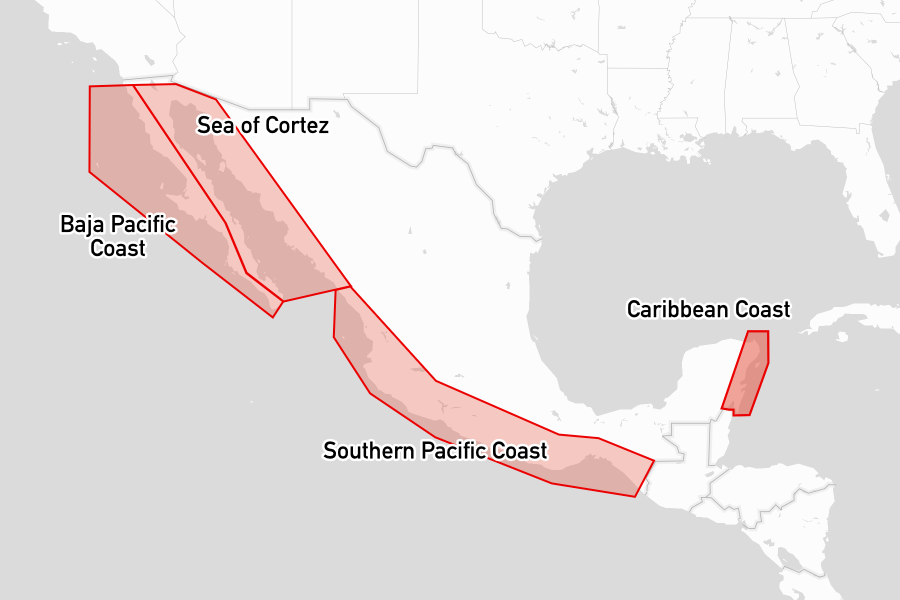
Explore sailing areas
Our sailing area guides contain the most useful information for cruisers, including top-rated places to stay, attractions, yacht services, and summaries of yacht clearance experiences.
- Mexico Caribbean Coast Highlighted by beautiful beaches and vibrant marine life, ideal for divers and beachcombers alike.
- Southern Pacific Coast Offers diverse landscapes and well-positioned ports for extensive coastal cruising.
- Baja Pacific Coast A rugged, desert-backed shoreline with remote anchorages suited to long coastal passages.
- The Sea of Cortez Famed for its remote anchorages and unique, thrilling wildlife encounters.
Yacht clearance and notes for mariners
See the relevant sailing area page above for details.
The off-season
Many private cruising yachts move away from Mexico’s more exposed Pacific and Caribbean coasts during hurricane season, either shifting within the country to more sheltered areas or departing the region entirely. Some crews base their boats in better-protected marinas and hurricane holes in Baja California and the Sea of Cortez, where seasonal liveaboard communities form, while others route south toward Central America, north to the United States, or onward to the South Pacific to sit out the peak storm period.
Facts for visitors
- Best times of year to sail here: November to May
- Most common type of shore power: 120V 60Hz
- Cost for provisioning: Medium
- Currency: Mexican Peso (MXN)
- Personal security: Variable, generally requires vigilance especially in urban areas
- Emergency phone numbers:
- Police: 911
- Coast Guard: 01 800 MARINA1 (627 4621)
- International dialing code: +52
- Time zone(s): UTC -8 to UTC -5
Maritime history
The maritime history of Mexico is steeped in the traditions of its indigenous peoples, who navigated the coastal waters long before European contact. The Mayas and Aztecs engaged in sea-borne trade along the coasts, leaving behind a legacy of intricate navigational traditions and maritime commerce. Their rich cultural history along the Mexican coast has largely influenced contemporary sailing practices and traditions.
The age of exploration saw Spanish conquistadors arriving in the 16th century, greatly impacting the development of maritime routes and trade in Mexico. Mexico's ports, such as Acapulco and Veracruz, became central nodes in the trans-Pacific Manila galleon trade that linked the New World with Asia. These historical passages left a mark that still influences Mexico’s coastal cities and their cultural offerings, alongside stunning colonial architecture.
Into the modern era, Mexico has maintained its strategic coastal importance, particularly on the Pacific side. The government has been developing and modernizing significant port areas and infrastructure to accommodate larger vessels and increased maritime activity. The emergence of recreational sailing, aided by the development of marinas, enhances the allure of Mexico’s coastline for cruisers.
Sailors today can immerse themselves in this multifaceted history by visiting numerous historic port cities and museums. Sites such as the Museo Naval Mexico in Veracruz offer a view into the country’s comprehensive maritime legacy, showcasing artifacts and exhibitions linked to its rich seafaring history.