
Wallis and Futuna
Last updated: 1 January 1970
At a glance
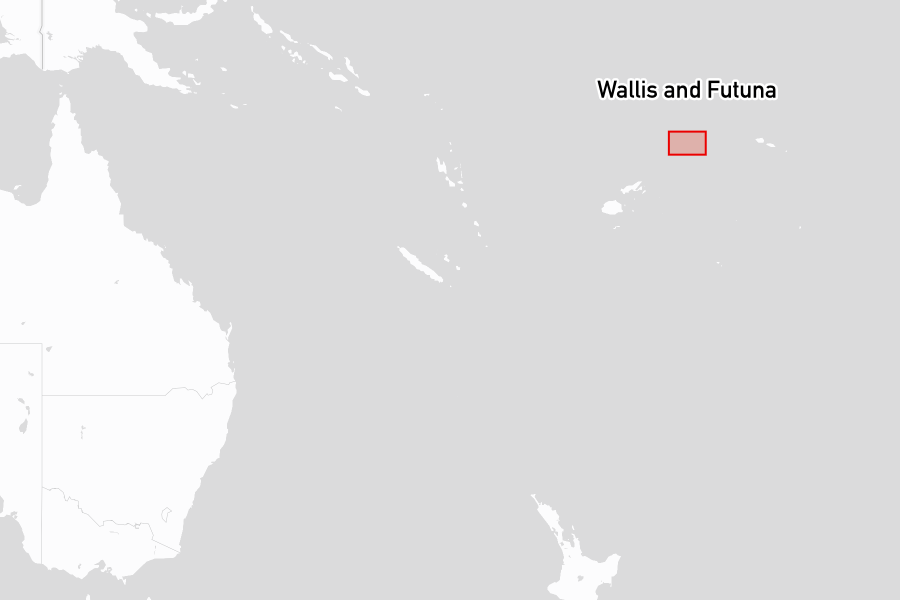
Wallis and Futuna is a French territory in the South Pacific comprising two island groups. Wallis, the larger and more northerly island, is a low-lying volcanic island surrounded by a lagoon. Futuna, to the southwest, is steep-sided and sits alongside the uninhabited island of Alofi.
Attractions
Lake Lalolalo is one of several crater lakes on Wallis, sitting in the island's forested interior. It is considered a sacred site.
The Basilica of St. Pierre Chanel on the north coast of Futuna at Poi is a large church dedicated to the first Catholic missionary on the island, who was killed in 1841 and later canonised as patron saint of Oceania. An annual pilgrimage to the basilica and a service takes place on 28 April, the feast day of St Pierre Chanel.
Both islands observe strong customary protocols at heritage sites and during ceremonies.
Yacht clearance links
Useful yacht clearance links:
- Noonsite: Clearance procedures, processes and fees.
- https://www.noonsite.com/place/wallis-and-futuna/
Yacht clearance reviews
The following lists summarize noforeignland user reviews for clearing in at ports of entry and when using clearance agents in Wallis and Futuna:
Ports of entry offices
|
Customs procedures are straightforward at this port of entry. Clearance typically involves filling out a few papers, and passport stamping may occur if police are present. Staff communicate primarily in French, which could present challenges for non-French speakers.
Place details mention: check in steps.
|
|
The personnel are very friendly. Check-in was completed on Saturday and check-out was handled for Sunday. This indicates effective service capability at this port of entry office.
Place details mention: check in steps.
|
Notes for mariners
The islands see relatively little yacht traffic and are visited more for convenience than as a destination in their own right. Futuna in particular is used by boats based in Fiji as a short run to reset their immigration status, with many clearing in and out in a single stop.
The off-season
During the off-season, most yachts relocate to Pacific bases with better infrastructure and shelter.
Facts for visitors
- Best times of year to sail here: May to October
- Shore power: 220V 50Hz
- Provisioning cost: High
- Currency: CFP Franc (XPF)
- Personal security: Wallis and Futuna has low levels of crime
- Emergency phone numbers:
- Police: 17
- Fire: 18
- Ambulance: 15
- International dialing code: +681
- Time zone: UTC+12
Maritime history
Wallis and Futuna were settled by Polynesian peoples well before European contact, with the two island groups developing distinct identities. Wallis was subject to repeated Tongan incursions, and Tongan cultural influence shaped its chiefdom structures. Futuna, by contrast, maintained closer affinities with Samoa and resisted Tongan dominance.
European contact came in 1616 when Dutch navigators Willem Schouten and Jacob Le Maire sighted Futuna and Alofi, naming them the Hoorn Islands after their home port. The Wallis Islands took their European name from British captain Samuel Wallis, who sailed past in 1767. French Marist missionaries arrived in 1837 and had converted most of the population of both islands to Catholicism by the mid-1840s. Pierre Chanel, who was killed on Futuna in 1841 and later canonised, was among them.
France established formal protectorates over Wallis in 1887 and Futuna in 1888, at the request of the islands' customary rulers and under significant missionary influence. The arrangement was not a conventional colonisation; French authority was limited largely to external affairs, with customary kings retaining authority over their own populations.
During the Second World War, Wallis and Futuna sided with the Vichy regime and remained isolated for seventeen months until Free French forces and around 2,000 American troops arrived in 1942. The American military presence left a lasting mark on Wallis's infrastructure. A referendum in 1959 saw the islands vote to leave the administration of New Caledonia and become a French overseas territory, a status formalised in 1961.