
Vanuatu
Last updated: 11 April 2026
At a glance
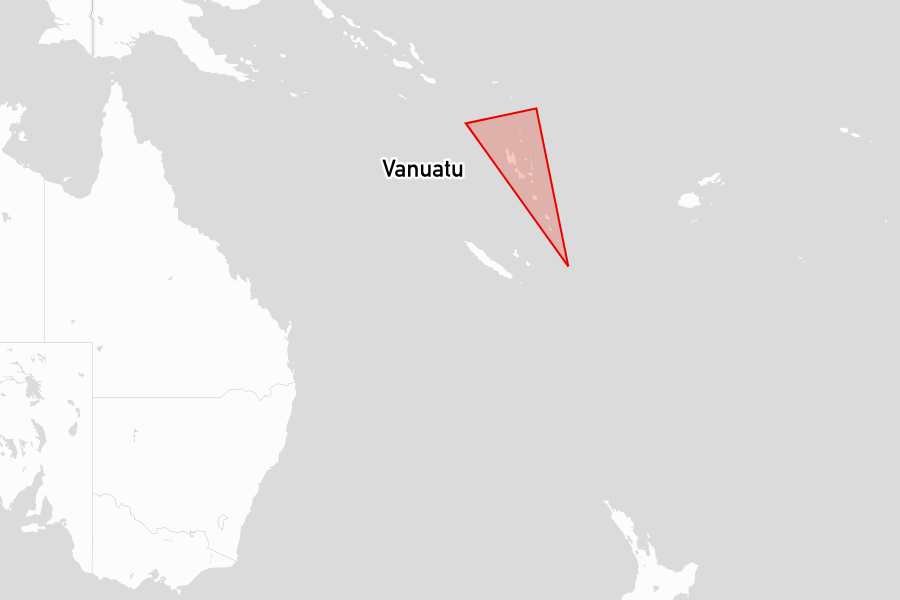
Vanuatu is an archipelago of more than 80 islands stretching roughly 1,300 kilometres through Melanesia, from the Torres Islands in the far north to Aneityum in the south. The islands are volcanic in origin and several remain active, most visibly Yasur on Tanna, which erupts continuously. The landscape ranges from rainforest and black-sand beaches to limestone plateaus and reef-fringed lagoons.
The population of around 330,000 speaks more than 100 distinct languages, making Vanuatu one of the most linguistically diverse nations on earth. Bislama, English, and French are the official languages, a legacy of the joint British and French administration that governed the islands until independence in 1980. Kastom, the system of traditional law and cultural practice, remains central to daily life across much of the chain.
Attractions
Tanna
Mount Yasur erupts continuously, with loud detonations, ash columns, and incandescent lava visible after dark. Tours run at sunrise, midday, and sunset from Port Resolution. Activity levels and cloud cover vary, but the sound and vibration of the volcano are present even in quieter periods.
The Mount Yasur Volcano Trail is a guided hike through village land, gardens, and forest to the crater, covering around 13 kilometres return. An overnight option puts campers at the base of the volcano for sunset and dawn views.
Village visit with Jocelyn near Port Resolution gives access to kastom village life through a guided tour of the village and gardens, with options for a traditional earth-oven meal, weaving workshops, and cooking demonstrations.
Éfaté
The Fire Show at Beach Bar at Mele runs on Friday evenings, with a circus and laser show on Sundays. It has been a regular fixture for visiting sailors across multiple seasons.
A WW2 Corsair airplane wreck lies in around 2 metres of water off Éfaté, snorkelled from the dinghy at mid to high tide.
Malekula and the Maskelyne Islands
The Maskelyne Islands Dugong Tour takes snorkellers to where a resident dugong population congregates outside the reef. Close encounters are common and the coral in the area is in good condition. Dugongs are also seen opportunistically at Gaspard Bay and the Uilendeuv Sand Bank, with sightings tied to the tide.
The Lavrisi Yacht Club hosts island nights, traditional meals, and sailing canoe races between visiting crews and locals.
Ambrym
A shallow wreck at Craig Cove sits in 0 to 6 metres and is snorkelled at high tide. The coral on the northern edge of the bay is among the healthiest reported in Vanuatu, set against a black sand bottom.
Pentecost
Mount Taputoara rises to 593 metres with panoramic views from the summit, reached by a strenuous bush hike with a local guide.
Espiritu Santo
Matevulu Blue Hole is a freshwater pool reached by dinghy up a jungle river, with rope swings and a slide. Malo Blue Hole on Malo island is a similar dinghy trip through clear water with turtles in the shallows.
At Million Dollar Point east of Luganville, US forces dumped military equipment into the sea at the end of the Second World War rather than sell it to the colonial administration. The site is now an artificial reef with coral, fish, turtles, and hardware to 40 metres.
Places to stay
Below are the most popular and highly rated places to stay, based on reviews from the noforeignland community:
Anchorages

|
Lekona Bay
★
5.0
Gaua
Anchorage at Lekona Bay provides great holding and reasonable swell protection. Visitors can access the beach easily. The local village lacks power but offers trade opportunities and cultural experiences such as water dancing.
|

|
Port Olry Anchorage
★
5.0
Espiritu Santo
Crystal clear water and beautiful sandy beaches characterize this anchorage. Visitors can enjoy great snorkeling and access to a small village for supplies and meals. Several activities, like beach fires and exploring the island, enhance the experience.
|

|
Maewo
The anchorage is well protected even in strong winds. Visitors appreciated the friendly villagers, beautiful nearby waterfall, and activities such as snorkeling for a small fee. A local guide, Ericka, offers hiking to the waterfall and prepares meals like coconut bread.
|

|
Aisari Bay, Aori Island
★
5.0
Espiritu Santo
Sheltered and calm, Aisari Bay features good holding in sand, with a depth of 12m. Visitors report observation of cows on the beach and turtles in the bay, enhancing the overall experience. A restful night's sleep is frequently mentioned.
|

|
Foreland Bay, Epi Island
★
5.0
Epi
Anchoring is accessible with sandy bottoms in various depths. The anchorage is noted for its protection from swell, providing a stable environment. Visitors have reported a welcoming atmosphere in nearby villages and opportunities for diving.
|

|
Awei Island
★
5.0
Malekula
This anchorage features a calm and protected environment, ideal for anchoring in shallower waters. Visitors highlight the good holding conditions and friendly interactions with the local village. The setting includes access to a sandy beach on the mainland.
|

|
Gaspard Bay
★
4.8
Malekula
Anchoring is feasible in sheltered conditions with credible holding in mud. Dugongs frequently grace the area, enhancing the experience. Visitors should verify charts before navigating the reef.
|

|
Bushmans Bay
★
4.8
Gaua
The anchorage features a welcoming community, clear waters, and opportunities to interact with locals. Visitors may enjoy trading for fruits and can experience unique cultural performances. Some reports indicate the anchor may slide under strong winds, suggesting careful anchoring practices.
|

|
Malekula
The anchorage at Uliveo allows for deep holdings with ample space for several vessels. Visitors enjoy a welcoming atmosphere and local interactions. Notable activities include snorkeling and exploring nearby villages.
|

|
Moso Island
★
4.6
Éfaté
Clear waters and sandy bottoms characterize the anchorage, allowing for easy anchoring in depths of approximately 12 to 18 meters. A lovely beach enhances the experience, though access with a dinghy may require a longer distance. Visitors reported a local attempting to charge for swimming, which varied in legitimacy.
|
Marinas

|
Yachting World Marina
★
4.2
Éfaté
The marina features friendly staff who assist with mooring. Some reviews indicate the presence of tight moorings, with a night cost of 2500 vatu. However, the laundry services are expensive and may lead to billing confusion.
|
Moorings

|
Espiritu Santo
Moorings are well maintained and protected from prevailing winds, enhancing safety during stays. Guests appreciate the prompt communication from management and the efficient water taxi service to town. The diving experience offered is highlighted as enjoyable by visitors.
|
|
No image
|
Yachting World Moorings
★
4.8
Éfaté
Moorings are in good condition and accommodate many boats, though they are relatively close together. Staff are noted for their helpfulness, enhancing the experience for visitors. Reservations can be challenging with some communication delays.
|
Boat services
Below are the most popular and highly rated boat services, based on reviews from the noforeignland community:
Chandlers

|
Bodiam Engineering
★
5.0
Éfaté
Service is provided for engine-related issues. The technician receives commendations for being methodical and clean in his work. The service is certified for Yanmar engines.
|

|
Éfaté
A wide selection of fishing gear is available. Reviews highlight the store's extensive inventory, ensuring visitors can find most of their fishing needs fulfilled.
|
Boat services
|
Port Vila Wood workshop
★
5.0
Éfaté
Expertise in dealing with woodwork services is evident, particularly marine plywood. John is highlighted for being very helpful in repairing deck issues. Visitors have also appreciated the opportunity to use tools for their projects.
|
Yacht clearance links
Useful yacht clearance links:
- Noonsite: Clearance procedures, processes and fees.
- https://www.noonsite.com/place/vanuatu/
Yacht clearance reviews
The following lists summarize noforeignland user reviews for clearing in at ports of entry and when using clearance agents in Vanuatu:
Ports of entry offices
|
Espiritu Santo
The check-in process involves multiple steps including visits to immigration, the port office, and customs. Fees for clearance and biosecurity inspections are applicable. Visitors should expect a fee structure around 8,000 Vatu for clearance operations.
Place details mention: check in steps, fees or payments, prearrival requirements, departure requirements and official inspections.
|
|
Éfaté
Customs, Immigration, and Biosecurity are now located together at the Yachtingworld Marina. The check-in process is reported as straightforward and quick. However, finding the office can be challenging, necessitating a walk from the dinghy landing.
Place details mention: check in steps.
|
|
Éfaté
A fee of 8150 VT was required for a 12t catamaran's clearance. Cash payment only is needed, with some difficulty locating the office in Port Vila. Visitors should check recent Reviews for additional context or updates.
Place details mention: fees or payments and departure requirements.
|
|
Éfaté
Allow up to 3 hours for the checkout process, which involves paying port fees and visiting immigration. Staff availability can be inconsistent, leading to delays during the process. Visitors should check recent Reviews for additional context or updates.
Place details mention: opening hours.
|
|
Sola Immigration Office
★
1.0
Vanua Lava
The Sola Immigration Office was closed on 24 Sep 2024 and will not reopen until next month. This information was confirmed by visitors attending at that time. Visitors should check recent Reviews for additional context or updates.
|
Yacht clearance agents
|
Stanley
★
5.0
Tanna
Stanley facilitates customs and immigration processes effectively. Assistance includes arranging transportation and tours, although the ride to the ATM can be long and uncomfortable. Certain tours, such as the Kustom Village Lakel tour, may not meet expectations.
Place details mention: check in steps, required documents, fees or payments and cruising permits.
|
Notes for mariners
Southeast trade winds prevail from April to October. The cyclone season runs from November to April.
Chart accuracy here varies significantly, particularly in the central and northern groups. Satellite imagery is a useful supplement to charts. Reef navigation is best undertaken with the sun high and behind the observer.
Tide prediction apps have shown errors of two to three hours in some areas.
Ciguatera is a significant risk. Local advice should be sought at each island.
The off-season
The cyclone season runs from November to April, and most cruising boats depart by November, heading south to New Zealand or west to Australia. Port Vila on Éfaté is the most common final stop for provisioning, fuel, and clearance before departure. No anchorage in Vanuatu carries formal cyclone-hole status with most insurers, and Port Vila harbour suffered significant yacht losses during Cyclone Pam in 2015.
Facts for visitors
- Best times of year to sail here: May to October
- Most common type of shore power: 230V 50Hz (Australian/New Zealand plug type)
- Cost for provisioning: Medium
- Currency: Vanuatu Vatu (VUV)
- Personal security: Generally considered safe.
- Emergency phone numbers:
- Police: 111
- Ambulance: 112
- Fire: 113
- Maritime rescue: 114
- International dialing code: +678
- Time zone: UTC+11 (no daylight saving)
Maritime history
The first settlers reached Vanuatu around 3,500 years ago, the descendants of the Lapita people who spread across the western Pacific in longboats carrying pigs, chickens, yams, and taro. They established small autonomous clans across the islands, developing over millennia into the extraordinary linguistic and cultural diversity that survives today. Ancestral spirits, magic, and the grade-taking ceremonies through which men accumulated social rank remained central to life across the chain, and kastom practice continues to shape daily existence on many islands.
European contact began with the Portuguese navigator Pedro Fernandes de Queirós, who landed at Espiritu Santo in 1606 and named it Austrialia del Espíritu Santo. Louis-Antoine de Bougainville followed in 1768 and James Cook charted the archipelago in 1774, giving it the name New Hebrides. The nineteenth century brought missionaries, traders, and labour recruiters, and the practice of blackbirding, the coercive recruitment of island men for Queensland sugar plantations and Fijian estates, affected the southern and central islands severely from the 1860s through the 1900s.
From 1906 the islands were governed jointly by Britain and France under an arrangement that ran two entirely separate administrations, courts, and police forces side by side over the same territory. Residents could choose which country's laws applied to them. During the Second World War the islands became a major Allied base, and Luganville on Santo developed into one of the largest US military installations in the Pacific. When American forces departed, they dumped vast quantities of surplus equipment into the sea at what became known as Million Dollar Point rather than accept the nominal prices offered by the colonial administration.
Vanuatu achieved independence on 30 July 1980, a process complicated by a brief armed rebellion on Santo led by the Nagriamel movement, which was suppressed with the assistance of Papua New Guinea forces. The new nation adopted a policy of non-alignment and the date of independence, 30 July, remains the national holiday.