
Tunisia
Last updated: 11 April 2026
At a glance
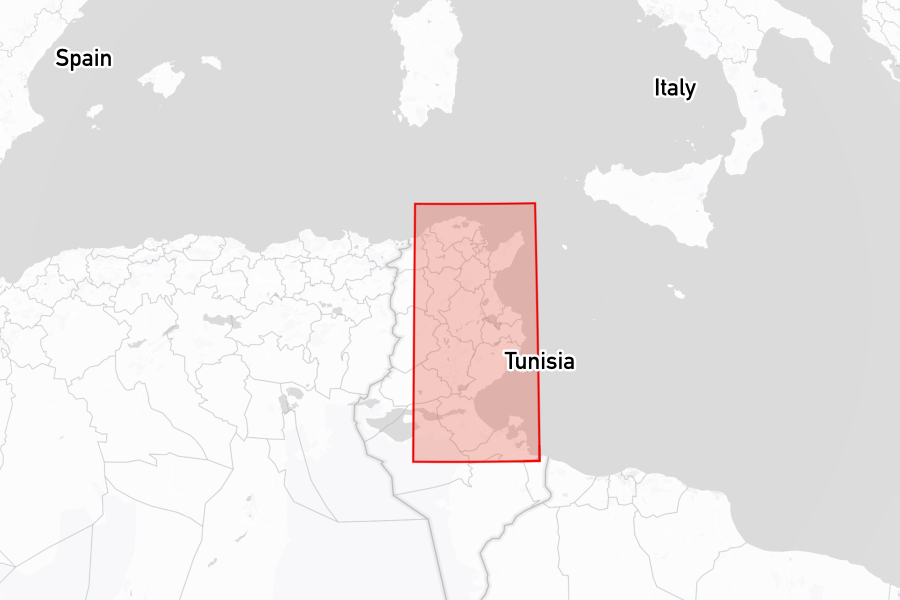
Tunisia sits on the northern shore of Africa, between Algeria and Libya, just across from Sicily. The coast is low-lying for much of its length. Monastir and Hammamet are the principal bases for visiting yachts.
Attractions
Sidi Bou Said is a compact clifftop village on a headland north of Tunis, known for its whitewashed buildings and blue doors, and for the quality of its Mediterranean light and setting that has drawn artists and writers as residents and visitors for over a century.
The National Bardo Museum in Tunis holds artifacts from Carthage alongside one of the world's largest collections of Roman mosaics, housed in a former palace.
Inland at El Djem, the El Djem Amphitheatre is a Roman colosseum with a capacity of 35,000 that remains largely intact, with open access to the arena floor, underground corridors, and upper seating tiers.
Places to stay
Below are the most popular and highly rated places to stay, based on reviews from the noforeignland community:
Anchorages

|
The anchorage offers good holding on sand. It is noted that anchoring in Tunisia may now require permission from the marina and police authorities. Visitors should check recent Reviews for additional context or updates.
|
Marinas

|
Bizerte
★
4.0
Friendly and efficient customs and police interactions are reported. Visitors note the marina's reasonable fees, including included water and electricity for smaller vessels. A variety of provisioning options and dining experiences are available nearby.
|

|
Gammarth Marina
★
4.0
Marina staff are friendly and helpful, with good customs processing. There are significant issues with the shower and toilet facilities. Deep water entrance may pose challenges for vessels with drafts over 2 meters due to silt and ongoing dredging.
|

|
Entrance depth is prone to silting, with 2.0 to 2.2 meters reported. Facilities need improvement while taxi services are inexpensive. The marina provides access to a beautiful town and nearby historical sites.
|

|
Monastir Cap Marina
★
3.8
Check-in procedures are efficient but may involve lengthy paperwork and inspections by customs officers. Marina staff are friendly, with reports of a welcoming community and social activities. However, visitors should be aware of potential security concerns regarding docking and personal belongings.
|

|
Yasmine Hammamet
★
3.8
Friendly and helpful staff assist with entry procedures and facility access. Cleanliness of sanitary facilities and the surrounding area could improve. Visitors should be prepared for potential additional costs related to customs and checkout procedures.
|
Harbours

|
Kelibia
★
2.7
Visiting boats can dock in the busy fishing harbour, but expect no facilities or cleanliness. Customs procedures may be lengthy and challenging. Local officials may be polite, but bureaucratic issues were highlighted by visitors.
|
Boat services
Below are the most popular and highly rated boat services, based on reviews from the noforeignland community:
Boatyards

|
Monastir Yard
★
5.0
Service includes hoisting, standing for three days, power washing, sanding, two layers of antifoul, prop polishing, and anode replacement. A cost of 500 euros is reported for the service. Staying on board during service is permitted.
|
Chandlers
|
No image
|
Monastir Marine Services
★
4.0
A selection of screws is available. The stainless steel screws provided are 304 grade, though the lack of marine grade 316l may limit options for those needing higher corrosion resistance. Visitors should check recent Reviews for additional context or updates.
|
|
No image
|
Rodrigues chandlery
★
1.5
The chandlery has very limited stock, with many shelves reportedly empty. Observations indicate that local boats prefer to order supplies from abroad rather than rely on this location. Visitors should check recent Reviews for additional context or updates.
|
Boat services
|
MT Marine Services
★
5.0
Service includes assistance with various tasks such as electrical work, engine servicing, and installation of systems. Visitors reported helpful local guidance on stores and spare parts. Mike and Jo are noted for their welcoming nature and support throughout the process.
|
Yacht clearance links
Yacht clearance reviews
The following lists summarize noforeignland user reviews for clearing in at ports of entry and when using clearance agents in Tunisia:
Ports of entry offices
|
The customs and immigration process in Bizerte is straightforward. Visitors experience friendly interactions with the staff, making for an efficient check-in and clearance. Multiple Reviews highlight the pleasant nature of the service provided.
Place details mention: official boardings and departure requirements.
|
|
Sidi Bou Said Officials
★
4.5
Check-in procedures are handled directly with port officials. Some visitors experienced lengthy paperwork and inspections, but staff are noted for their friendliness. Expect potential requests for gifts alongside the clearance process.
|
|
Monastir
★
3.5
Administrative processes involve multiple steps including forms for customs and declarations. Interaction with officials can be variable, with some finding requests for items like expired flares. Visitors should check recent Reviews for additional context or updates.
Place details mention: check in steps.
|
|
Check-in procedures are available 24/7, taking approximately one hour. Customs may confiscate drones but not spearguns. Minor bribes are reported during check-in, with some visitors recommending gifts like chocolates or small bills.
Place details mention: check in steps and required documents.
|
|
Kelibia Officials
★
2.0
Arriving at the port can be challenging, with a lack of docking instructions and repeated documentation requests. Police and customs interactions may be lengthy and frustrating. Visitors should check recent Reviews for additional context or updates.
Place details mention: official inspections.
|
Notes for mariners
Clearance in Tunisia can be a slow process and baksheesh, although not officially sanctioned, is sometimes requested and can help. Drones are not permitted and may be confiscated.
The off-season
Options for living aboard your boat in this area include: Monastir Cap Marina and Yasmine Hammamet in Tunisia, Marina di Ragusa and Marina di Cala del Sole (Licata) in Sicily, and Marina di Roccella in southern Italy.
Facts for visitors
- Best times of year to sail here: April to October
- Most common type of shore power: 230V 50Hz
- Cost for provisioning: Low
- Currency: Tunisian Dinar (TND)
- Personal security: The coastal areas visited by most yachts are generally considered safe. Petty theft is the most common crime in tourist areas.
- Emergency phone numbers:
- Police: 197
- Ambulance: 190
- Fire: 198
- International dialing code: +216
- Time zone: UTC+1
Maritime history
Carthage, founded by Phoenician settlers around 814 BC on a peninsula commanding the strait between North Africa and Sicily, became the dominant naval power of the western Mediterranean, sustaining a commercial empire that reached from the Levant to Spain. Its destruction by Rome in 146 BC ended Punic control of the central Mediterranean, and the territory was rebuilt as the Roman province of Africa Proconsularis, supplying grain and supporting coastal trade for several centuries. Arab forces took Carthage in AD 698, and the port of Tunis gradually displaced it as the principal maritime hub of the region.
Ottoman rule from the 16th century brought Tunisian corsairs operating from Tunis and Bizerte into prominence across the central Mediterranean, preying on European merchant shipping until the early 19th century. France took control in 1881, developing Tunisia's ports and integrating them into wider Mediterranean trade networks until independence in 1956.
Tunisia's position astride the strait between North Africa and Sicily made it a critical theatre in the Second World War. Following the Allied landings in Morocco and Algeria in November 1942, both sides raced to control the ports of Tunis and Bizerte, which served as the main Axis supply route from Italy across what the Italians named la rotta della morte (the Route of Death). The fall of both ports in May 1943 cleared the central Mediterranean for Allied shipping and opened the way for the invasion of Sicily.