
Turks and Caicos Islands
Last updated: 14 February 2026
At a glance
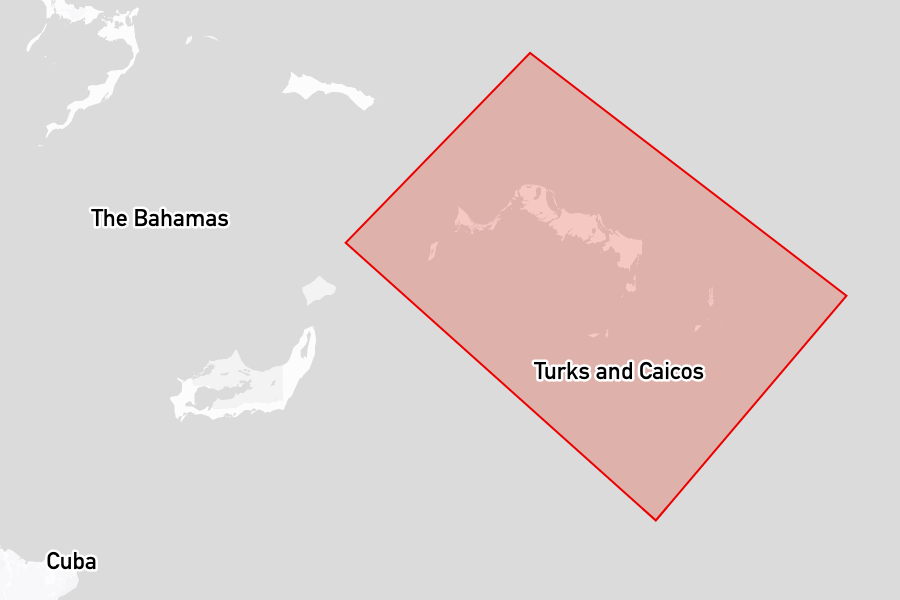
The Turks and Caicos Islands are a low, coral-reef archipelago between the Bahamas and the Dominican Republic, with clear banks, steep outer walls, and long sandy cays that feel closer to the Bahamas than to the Eastern Caribbean. A British Overseas Territory, it is most commonly approached by visiting yachts from the Bahamas or the Dominican Republic, with clearance often completed at Providenciales or South Caicos.
Attractions
Turks and Caicos attractions centre on beaches, diving and snorkelling, and a few standout islands and historic sites.
Little Water Cay is formally designated as a protected nature reserve and sanctuary for the endangered Turks and Caicos rock iguana. The Iguana Island Hiking Path provides a gentle walk with regular stops for coastal views, and iguana spotting.
The Grand Turk Lighthouse stands on the northern tip of Grand Turk as the country’s only lighthouse, a relatively small cast‑iron tower designed in Britain, shipped out in prefabricated sections and assembled here in 1852.
Places to stay
Below are the most popular and highly rated places to stay, based on reviews from the noforeignland community:
Anchorages

|
Bermudian Harbour
★
4.8
South Caicos
Calm conditions are prevalent, providing a peaceful anchorage protected from strong winds. Multiple visitors highlight the excellent holding in sand, clear water, and enjoyable snorkeling experiences. Entry may be shallow; caution is advised when approaching.
|

|
Providenciales
Depths inside are consistently sufficient, with reports suggesting around 3 meters. Entry can be challenging due to its narrowness and tidal considerations. Visitors have experienced calm conditions once inside the marina.
|

|
Malcolm’s Road Beach
★
4.5
Providenciales
Beaches in this location feature calm conditions without motorboat activity. Visitors noted anchoring can be tricky due to rocky areas, but depths of 10 feet provide good holding. The stunning blue water enhances the experience.
|

|
Taque Harbour
★
4.4
West Caicos
Anchorage accommodates up to four boats with good holding and shelter. Visitors appreciate the quiet environment and nearby beach access. Snorkeling opportunities are noted, enhancing the overall experience.
|

|
Big Sand Cay
★
4.4
Access is straightforward, with anchoring in depths of 3 to 6 meters noted to be easy. The holding is good, although some visitors experienced rolling due to swell. The area is remote and offers a beautiful natural setting for relaxation and wildlife observation.
|

|
Cockburn Harbor
★
4.4
South Caicos
This anchorage provides good holding and protection in most conditions. Clear water and easy access to customs are beneficial, though provisions are limited and expensive. Anchoring in sandy patches is advisable for comfort regarding swells from the channel.
|

|
Sirus Cove
★
4.3
Providenciales
Anchoring in Sirus Cove allows for quiet conditions and good holding in sandy patches. Snorkeling opportunities are reported to be excellent, with turtles commonly observed. Access to the nearby marina provides land access and grocery shopping, though dinghy docking can be challenging.
|

|
Pine Cay Beach
★
4.3
North Caicos
Anchoring is feasible with protection from the northeastern winds. Sandbanks become accessible at low tide, allowing for exploration on foot. Two notable dolphin residents are present, enhancing the local experience.
|

|
Mangrove Cay
★
4.3
Providenciales
The anchorage is comfortable, particularly at night when it becomes quiet and calm. Boaters report that conditions can be challenging during the day due to traffic from motorboats and jet skis. It accommodates roughly ten boats in the channel for anchoring.
|

|
Sim Cay Bay
★
4.2
Providenciales
Anchoring conditions vary. Strong westerly winds result in good holding, while easterly winds lead to a rolly experience. Visitors noted proximity to restaurants, although shallow areas may present challenges for dinghy access at low tide.
|
Marinas

|
South Bank Marina
★
4.7
Providenciales
The marina features helpful staff and provides easy customs clearance, with most reviews highlighting the convenience of check-in procedures. There are good facilities such as a restaurant and a nearby resort community. Visitors reported some ongoing construction but did not find it disruptive.
|

|
Blue Haven Marina
★
4.5
Providenciales
Facilities are modern and well-maintained, with friendly and accommodating staff. Multiple reviews highlighted access to resort amenities like the pool and gym. Jet ski traffic can create significant wakes and noise, especially for those on exterior docks.
|

|
South Side Marina
★
4.1
Providenciales
This marina offers affordable rates and friendly staff, with good shelter from wind. Some issues were noted with the channel depth and shower facilities. The location provides easy customs clearance and access to fuel services.
|

|
Turtle Cove Marina
★
3.3
Providenciales
No customs or immigration facility is available for check-in. Some visitors reported unwelcoming staff interactions and dissatisfaction with the condition of the marina. Others appreciated the hospitality and amenities but faced a dingy fee for dock usage.
|
Moorings

|
West Caicos
★
5.0
West Caicos
Diving opportunities are notable at the mooring buoys, which are situated in about 14m depth along the west coast. Visitors must vacate the buoys for local diving boats during specified hours. A cruising permit is necessary, and anchoring is prohibited.
|
Boat services
Below are the most popular and highly rated boat services, based on reviews from the noforeignland community:
Chandlers
|
No image
|
Walkin Marine
★
5.0
Providenciales
Services include sourcing electrical parts and tools for installation. A wide variety of spare parts is available. Visitors may find items useful for boat maintenance.
|
|
No image
|
South Bank marina
★
4.0
Providenciales
A variety of boat supplies are available at this chandler, including glass supplies, power cables, and pipes. This location is noted for its extensive offerings among marinas in the area. Visitors should check recent Reviews for additional context or updates.
|
Yacht clearance links
Useful yacht clearance links:
- T&C Border Force: Vessel Clearance
- https://borderforce.gov.tc/vessel-clearance
- Sail Clear: Pre arrival notification
- https://sailclear.com/index
- Visit Turks and Caicos Islands: Visa requirements
- https://www.visittci.com/travel-info/entry-requirements
- Visit Turks and Caicos Islands: Travelling with pets
- https://www.visittci.com/travel-info/entry-requirements/traveling-with-pets
- Noonsite: Clearance procedures, processes and fees.
- https://www.noonsite.com/place/turks-caicos/
Yacht clearance reviews
The following lists summarize noforeignland user reviews for clearing in at ports of entry and when using clearance agents in Turks and Caicos Islands:
Ports of entry offices
|
South Caicos
Offers: Customs, and immigration.
Customs processing at Cockburn Harbour generally involves cash payments, with a $50 charge for both check-in and check-out. Multiple reviews highlight quick and friendly service, but be aware of limited hours and potential delays during weekends. Visitors must have SailClear documentation available, ideally in printed form.
Place details mention: check in steps, required documents, fees or payments, opening hours, prearrival requirements, departure requirements and cruising permits.
|
|
Providenciales
Offers: Customs, and immigration.
Customs processing at Turtle Cove is efficient, with officers arriving within 15 minutes. Multiple visitors reported friendly interactions, making the clearance experience smooth. However, one reviewer highlighted the potential for delays when relying on marina services for customs calls.
Place details mention: check in steps, required documents, fees or payments, opening hours, prearrival requirements, departure requirements and cruising permits.
|
|
Providenciales
Offers: Customs, and immigration.
Efficient clearance service noted, with minimal waiting times and friendly staff. Some visitors reported issues with staff interactions that affected their experience. It is advisable to request the maximum visa duration possible, as authorities may be inflexible.
Place details mention: check in steps, required documents, fees or payments, prearrival requirements, departure requirements and cruising permits.
|
|
Providenciales
Offers: Customs, and immigration.
Check-in procedures are generally efficient and quick. Waiting times can vary, with some visitors noting significant delays, while others report fast processing and helpful staff. Availability of officers may affect the clearance experience.
Place details mention: check in steps, required documents, fees or payments, prearrival requirements, departure requirements and cruising permits.
|
|
Grand Turk
Offers: Customs, and immigration.
Check-in procedures are generally available but can involve long waiting times, sometimes up to 2 hours. Staff interactions were described as friendly, although overtime fees seem to be charged inconsistently. Visitors should be prepared for potential complications regarding the fee structure.
Place details mention: check in steps, required documents, fees or payments, prearrival requirements, departure requirements and cruising permits.
|
|
Southbank Marina
★
3.0
Providenciales
Offers: Customs, and immigration.
Check-in procedures were conducted with the immigration officer at the scheduled time. The customs and border protection officer managed both customs and immigration processes. Visitors have noted the staff's limited openness to questions.
Place details mention: check in steps, fees or payments, prearrival requirements, departure requirements, cruising permits and visitor visa requirements.
|
|
Providenciales
Offers: Customs, and immigration.
Waiting times can be extensive, with reports of delays up to six hours for processing. Procedures may lack clarity, leading to confusion among visitors. Reviewers noted varied interactions with staff, some experienced politeness while others encountered rudeness.
Place details mention: check in steps, required documents, fees or payments, prearrival requirements, departure requirements and cruising permits.
|
Notes for mariners
The navigation in Turks and Caicos should be approached with caution, as submerged reefs, shoals and coral heads are common throughout the islands.
The off-season
Hurricane season in the Turks and Caicos runs from June to November, with peak activity in late summer and early autumn; during this period many cruisers leave the islands.
Facts for visitors
- Best times of year to sail here: November to May
- Most common type of shore power: 120V 60Hz
- Cost for provisioning: High
- Currency: United States Dollar (USD)
- Personal security: While risks are generally lower in tourist areas, Providenciales and Grand Turk have seen higher levels of serious crime than other islands, including gang‑related crime involving guns and robbery. Aggressive feral dogs have also been reported in several areas across the islands.
- Emergency phone numbers:
- Police: 911
- Marine police: 911
- International dialing code: +1 649
- Time zone(s): UTC‑5 in winter and UTC‑4 in summer
Maritime history
Initially populated by Taíno and Lucayan peoples, the Turks and Caicos Islands were encountered by European navigators around the turn of the 16th century. Their position on the edge of major Caribbean routes drew intermittent attention from European powers, producing a shifting mix of claims and administrations over time. During the colonial era, the islands became known as a salt‑producing territory, with salt harvested from coastal salinas and exported as a vital preservative before refrigeration, and for many years it was one of the territory’s main export activities.
From the 18th and 19th centuries onwards, the islands were administered in different ways within the British imperial system, at times linked to the Bahamas and at other points governed separately, before settling into their present status as a British Overseas Territory. Throughout these changes, seaborne trade and coastal shipping remained the main connectors between the islands and the wider region, with small craft moving people, salt, and other goods through the shallow banks and reef cuts.
As the salt industry declined in the 20th century, the economy shifted towards tourism and offshore financial services, while fishing and small‑boat work remain significant in many communities. Sailors visiting today can explore historic sites such as the Grand Turk Lighthouse and old salt ponds and ruins on Grand Turk and Salt Cay, which give a concrete sense of the islands’ long association with coastal trade and navigation.