
El Salvador
Last updated: 29 January 2026
At a glance
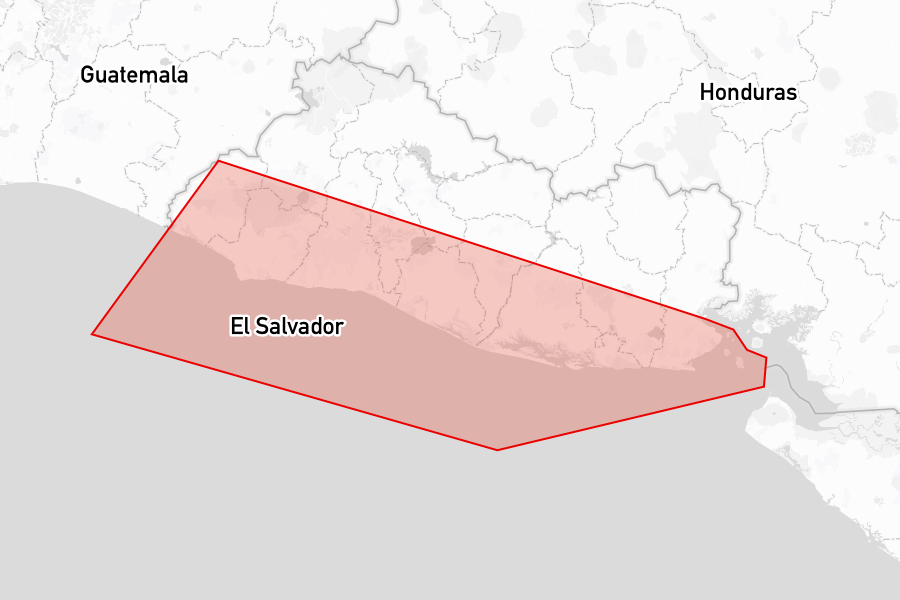
El Salvador is a small country on the Pacific coast of Central America, bordered by Guatemala, Honduras and Nicaragua. It has mangrove estuaries and a chain of steep volcanoes inland. The country is known for its Pacific surf breaks and coffee production.
Most visiting yachts visit estuaries such as Bahia del Sol, where local pilots guide boats across sandbars into well‑protected lagoons. San Salvador is the main hub for supplies and services.
Attractions
The Gulf of Fonseca, shared by El Salvador, Honduras and Nicaragua, offers good cruising grounds. A worthwhile inland trip is a hike up Santa Ana volcano, El Salvador’s highest volcano.
Places to stay
Below are the most popular and highly rated places to stay, based on reviews from the noforeignland community:
Anchorages

|
Meanguera Del Golfo
★
4.4
Anchoring in Meanguera Del Golfo shows good holding under various wind conditions, particularly during afternoon gusts. Check-in procedures are straightforward, and the locals are friendly, offering support with fuel delivery and info. Facilities are limited, with some services available in nearby La Union.
|

|
La Fuerza
★
4.0
The anchorage features good holding against gusts up to 30 knots from the north. Access is uncomplicated, with some fishermen around but no issues reported. Visitors should be aware of the murky water and potential fishing nets when approaching.
|

|
Isla Meanguera
★
3.3
Conditions vary with wind direction. Strong southwesterlies can create uncomfortable chop, while holding is reportedly good in calmer conditions. Views are appreciated, but swells and rolliness can disrupt longer stays.
|

|
Union
★
2.4
The anchorage provides accessibility to provisions, but is limited due to poor holding conditions with mud and debris. Visitors have reported difficulties with dinghy access and unsafe surroundings, especially concerning interactions with locals. Additionally, check-in procedures have generally been smooth and officials were friendly.
|
Marinas

|
The marina offers a smooth check-in process with authorities meeting visitors at the dock. Facilities include a pool, laundry service, and friendly staff. Challenges include strong tidal currents and wakes from passing boats.
|
Moorings

|
La Palma Moorings
★
4.7
Mooring buoys are available at this location. Visitors appreciate the strong, well-maintained moorings, and the hosts provide assistance and local insights. Wake from local traffic can disrupt the peacefulness, especially during weekends.
|
Yacht clearance links
Useful yacht clearance links:
- El Salvador Immigration: Application and payment for visa extension
- https://www.migracion.gob.sv/servicios/prorroga-de-permanencia-para-turistas/
- El Salvador Immigration: List of countries tha require visa to enter El Salvador
- https://www.migracion.gob.sv/servicios/listado-visa/
- Noonsite: Clearance procedures, processes and fees.
- https://www.noonsite.com/place/el-salvador/
Yacht clearance reviews
The following lists summarize noforeignland user reviews for clearing in at ports of entry and when using clearance agents in El Salvador:
Ports of entry offices
|
Union Immigration
★
5.0
Offers: Immigration, and visa renewals.
Check-in procedures at Union Immigration are straightforward and free for some nationalities. Visitors report friendly staff who assist with the process and provide translation services. The office also handles check-outs from El Salvador efficiently.
Place details mention: check in steps, required documents and visitor visa requirements.
|
|
Offers: Port authority.
Check-in and check-out processes are reported as straightforward, with fees of 30 USD for check-in and 40 USD for exit zarpe. Typical wait times are around one hour, so planning is advised. Recently, exiting via Meanguera has become more complicated as the exit zarpe is no longer universally offered.
Place details mention: temporary import requirements.
|
|
Offers: Immigration.
Processing for exit stamps and zarpe is generally perceived as straightforward. Visitors have reported minimal costs during the immigration process, although there is a noted change requiring check-out in La Union instead of at this office. Recent updates affect service availability.
Place details mention: opening hours.
|
|
Union Port Captain
★
3.5
Offers: Port authority.
The immigration and port authority processes are available here for check-in. A waiting time of one hour may be expected due to slow paperwork. A navigation permit costs 30 USD for 30 days.
Place details mention: check in steps, required documents, fees or payments, prearrival requirements and cruising permits.
|
Notes for mariners
When transiting bar‑entrance estuaries, including Bahia del Sol and Jiquilisco Bay, local knowledge is important as sandbars move and tidal streams and outflows can be strong. In the Gulf of Fonseca, naval patrols from the bordering countries may stop yachts to check documents.
The off-season
In the off season, most long‑term liveaboard cruisers in El Salvador congregate in the protected estuaries of Bahia del Sol and Jiquilisco Bay.
Facts for visitors
- Best times of year to sail here: December to April (dry season, generally more settled weather and less rain).
- Most common type of shore power: 120v 60Hz (typical for marinas serving North American boats, but individual facilities may vary).
- Cost for provisioning: Medium. Local markets provide staples at lower cost, while imported goods and marina‑area stores are usually more expensive.
- Currency: United States Dollar (USD).
- Personal security: Mainly safe for visitors in coastal and tourist areas; normal precautions are advised, especially in some urban districts.
- Emergency phone numbers:
- Police: 911
- Fire: 913
- Medical: 132
- Coast guard: no dedicated number, call 911
- International dialing code: +503
- Time zone(s): UTC -6 (no daylight saving time).
Maritime history
El Salvador's maritime history began with its indigenous peoples, who utilized the coastlines for fishing and intertribal trade. Over time, the impact of European exploration became pronounced, with Spanish colonization marking a period of significant transformation. The region's coastal areas played key roles in the movement of goods and people during the early days of exploration.
The colonial period of El Salvador saw its ports used for the export of goods such as indigo and cacao across to the Spanish empire. These routes not only facilitated trade but also connected El Salvador to broader maritime currents. Conflicts occasionally erupted during this era, with port cities often being the focal points of skirmishes and defensive developments.
In the modern age, El Salvador has seen its coastal towns develop gradually, with a modest sailing and fishing industry marking much of its shoreline activity. The advent of the 20th century brought growth in small-scale fishing and increased local maritime activity. While traditional crafts remain part of coastal culture, more recreational boating and adventurous sailing have surfaced, drawing cruising sailors interested in both history and serene exploration.