
French Polynesia
Last updated: 7 April 2026
At a glance
French Polynesia is a vast territory scattered across the central and eastern South Pacific, encompassing five archipelagos and spanning more than one thousand nautical miles of open ocean. The cruising ground ranges from high volcanic islands to low coral atolls, with the Society Islands serving as the main hub for facilities and fleet activity. Trade winds drive the principal sailing season, and the territory sits outside the main cyclone belt. It functions as both a destination in its own right and a major waypoint on transoceanic passages between the Americas and the western Pacific.
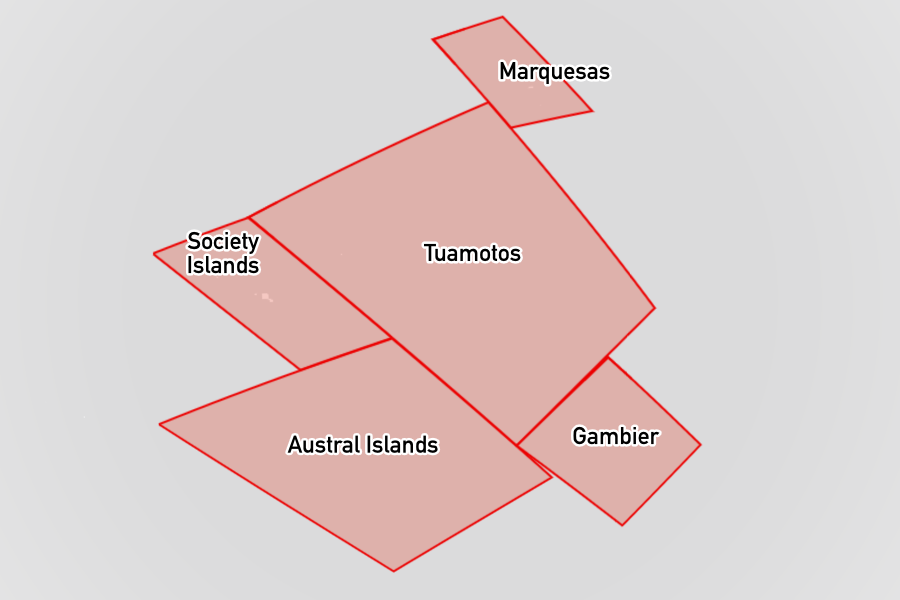
Explore sailing areas
Our sailing area guides contain the most useful information for cruisers, including top-rated places to stay, attractions, yacht services, and summaries of yacht clearance experiences.
- Austral Islands A remote chain of high islands seldom visited by cruising yachts.
- Gambier Islands A reef-enclosed group with a large sheltered lagoon and black pearl farms.
- Marquesas Dramatic volcanic islands rising from the ocean, the classic Pacific landfall for westbound passage-makers.
- Society Islands The main cruising hub of French Polynesia, with the greatest concentration of facilities and fleet activity.
- Tuamotus A vast chain of coral atolls with passes and lagoons offering some of the best diving in the Pacific.
Yacht clearance and notes for mariners
See the relevant sailing area page above for details.
The off-season
French Polynesia lies on the edge of the South Pacific cyclone belt, and the November to March season prompts most visiting yachts to move on. New Zealand is the most common destination for those continuing westward, while others haul out or take up marina berths in Tahiti for the duration. A proportion of the fleet remains afloat and continues cruising through the off-season, particularly in the northern archipelagos where cyclone risk is lower.
Facts for visitors
- Best times of year to sail: April to November
- Shore power: 220V 50Hz
- Provisioning cost: High
- Currency: CFP Franc (XPF)
- Personal security: Low risk for visitors, with petty theft the most common concern
- Emergency phone numbers:
- Police: 17
- Ambulance: 15
- Coast Guard: 16
- International dialing code: +689
- Time zones: UTC -10 (Society Islands and Tuamotus), UTC -9:30 (Marquesas), UTC -9 (Gambier)
- Vessel stay limit: Vessels may remain in French Polynesia for up to two years, after which they must be imported
- Duty-free fuel: Foreign vessels are eligible for a duty-free fuel certificate obtained through the Papeete customs office; Papeete-based agents can handle the application remotely at any point during the visit
Maritime history
Polynesian navigators reached the islands of what is now French Polynesia over two thousand years ago, establishing inter-island voyaging networks across the central and eastern Pacific. Their double-hulled canoes and non-instrument navigation techniques, using stars, swells, and wind patterns, supported long-distance travel across some of the largest stretches of open ocean on earth.
European contact began in the 16th century with Spanish expeditions, followed by British and French voyagers in the 18th century, including Samuel Wallis, who reached Tahiti in 1767, and Louis-Antoine de Bougainville shortly after. James Cook made three visits to the Society Islands between 1769 and 1777, producing detailed charts that opened the region to increased European activity. Missionaries arrived from the late 18th century, establishing coastal settlements that became centres of early colonial influence.
France asserted formal control over Tahiti and its dependencies in 1842, and the territory's boundaries expanded through the remainder of the 19th century. The port at Papeete developed as the administrative and commercial centre, handling inter-island shipping, supply vessels, and later serving as a provisioning stop for vessels crossing the Pacific.
French Polynesia remains a significant waypoint on transoceanic sailing routes today, lying across the principal passages between the Americas and the western Pacific. The traditional voyaging heritage of its Polynesian communities has seen renewed interest in recent decades, with the construction and sailing of traditional canoes reviving navigation methods that predate European contact by centuries.